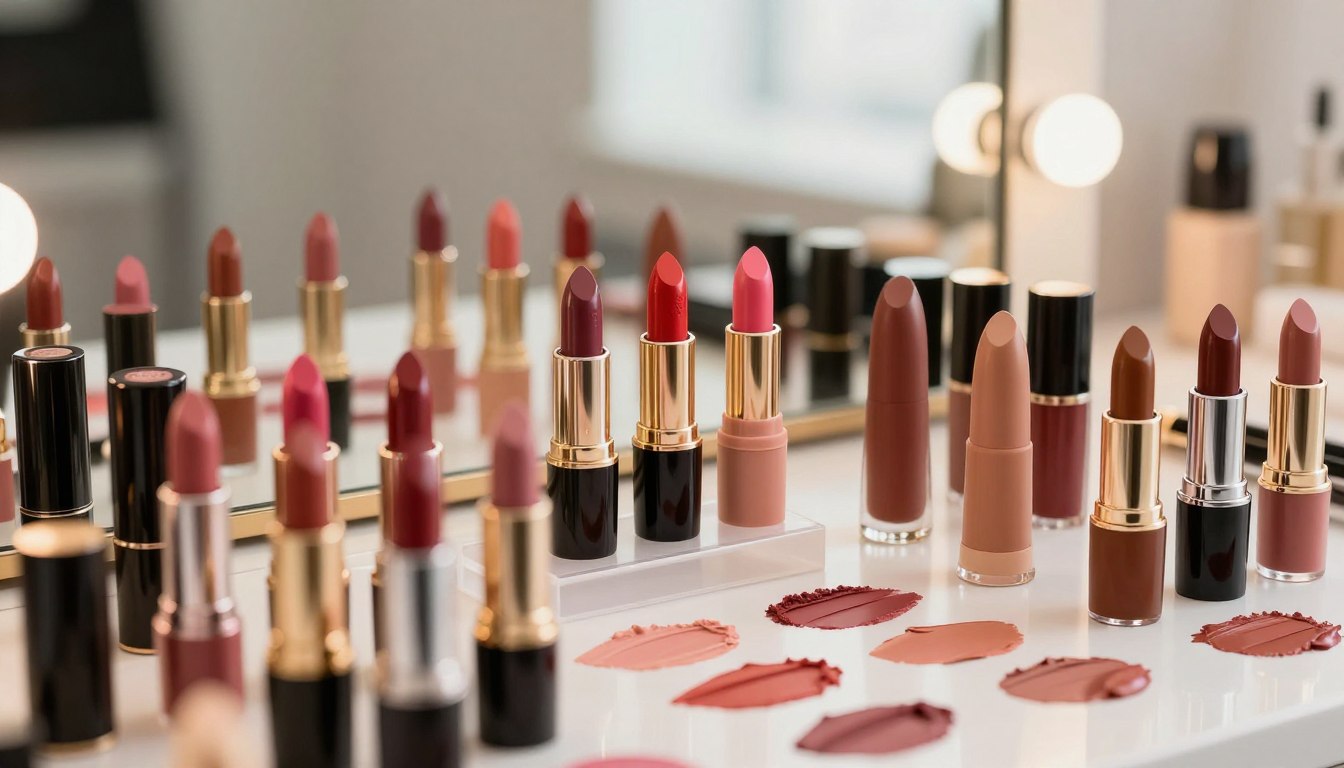
Best Lipstick Shades for Every Skin Tone
“Makeup is a way for a woman to look and feel like the best version of herself.” – Bobbi Brown. This idea captures the true power of cosmetics. It’s not about covering up; it’s about revealing your confidence.
A single tube of color can transform your entire look. Your eyes seem brighter, and your complexion glows. But with countless options available, finding that perfect match for your unique coloring can feel overwhelming.
This guide is here to simplify that process. We’ll move beyond just picking a favorite hue. You’ll learn how to understand your skin’s undertones and how they interact with different cosmetic formulas.
Say goodbye to a drawer full of products that don’t quite work. We provide practical, actionable steps to build a versatile collection that truly flatters you. Expert advice from professional artists will guide you every step of the way.
Remember, these are guidelines to empower your choices, not strict rules. The ultimate goal is to find the colors that make you feel beautiful and confident.
Key Takeaways
- Choosing the right cosmetic color can enhance your natural features and elevate your entire appearance.
- Understanding your skin’s undertone is the key to selecting the most flattering hues.
- This guide offers a clear, step-by-step process to identify your ideal matches.
- Expert tips from makeup artists will help you navigate the vast world of options.
- The final choice is always about what makes you feel the most confident and expressive.
The Role of Skin Tones and Undertones in Lipstick Selection
Many people overlook the crucial difference between surface color and underlying tones when choosing makeup. Understanding this distinction transforms your approach to color selection.
Defining Skin Tone vs. Undertone
Your skin tone describes your surface coloring. It ranges from light to deep and can change with sun exposure. This is what you see when you look in the mirror.
Your undertone is the subtle hue beneath the surface. It remains constant throughout your life. This underlying base determines how colors interact with your complexion.
Fair skin can have warm undertones. Deep skin can have cool undertones. These characteristics operate independently of each other.
Methods to Identify Your Undertones
Check your wrist veins in natural light. Blue or purple veins suggest cool undertones. Green veins indicate warm undertones.
Try the jewelry test. Notice if silver or gold complements your skin better. Silver typically flatters cool undertones, while gold enhances warm ones.
Examine your bare skin in natural lighting. A golden glow suggests warm undertones. A pinkish cast indicates cool undertones.
Consider how your skin reacts to sun exposure. Easy tanning often means warm undertones. Frequent burning suggests cooler undertones.
These simple tests help you understand your unique color profile. This knowledge serves as the foundation for all your cosmetic choices.
The Science Behind Lipstick Color Formulation
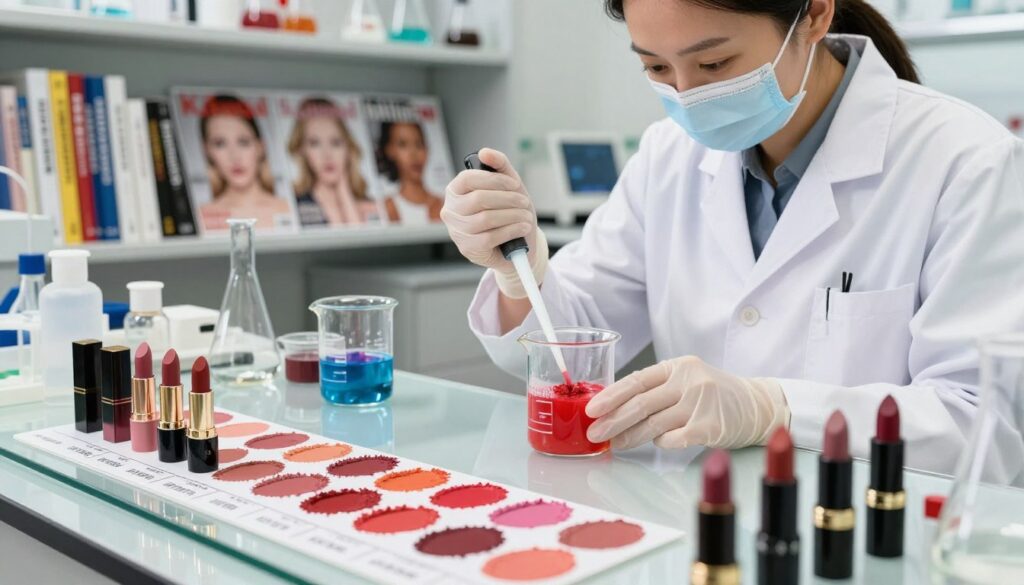
The creation of cosmetic pigments involves a fascinating scientific process that begins long before you see the final shade. Manufacturers establish the foundation of each product by determining its underlying tones first.
Makeup Science That Influences Shade Creation
Cool-toned cosmetic products use blue and purple as their base. These underlying hues create harmony with complexions that have similar cool undertones.
Warm-toned formulations rely on orange and red bases. These pigments enhance the natural golden or yellow tones in warm complexions.
When the undertone of your cosmetic matches your skin’s natural base, the result looks natural and flattering. Clashing undertones can make even beautiful colors appear unflattering.
Neutral options balance both warm and cool elements. They work across different undertones but may not provide the same dramatic enhancement as perfectly matched shades.
Testing products on your lips gives the most accurate color match. The skin on your wrist may have different undertones than your lip area.
Best Lipstick Shades for Every Skin Tone
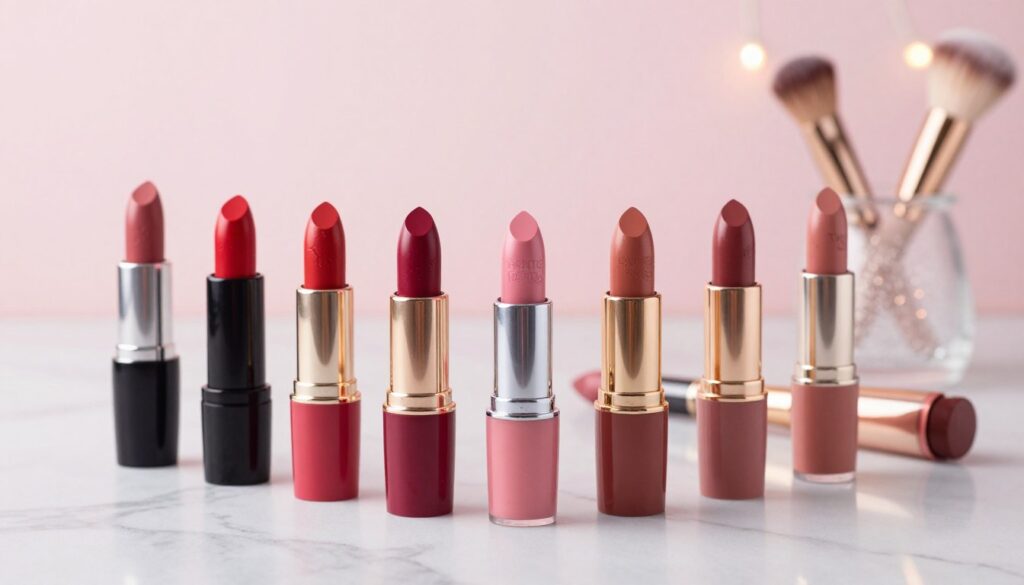
Translating undertone theory into real-world choices is the key to finding your perfect match. Let’s explore specific recommendations from top artists to build your personalized collection.
Lip Color for Cool Undertones
Professional makeup artist Manuel Espinoza suggests shades with depth for cooler complexions. He recommends soft mauves, deep berries, or a pop of magenta.
The most flattering lipstick shades for cool undertones have a blue purple base. For a bold red, choose a cherry red over an orange-based one.
Beautiful nudes include rosy pinks or taupey beiges. Explore options from Chanel, Rare Beauty, and Clinique for proven formulas.
Options for Warm and Neutral Undertones
Celebrity artist Sean Harris favors sun-kissed colors for warm skin. Think peachy nudes, corals, and warm browns like terracotta.
If you have neutral undertones, you have wonderful versatility. Makeup artist Tamara Boyd notes that mauve, rose, and balanced reds work beautifully.
These hues bring out the perfect harmony in your complexion. Brands like Pat McGrath Labs and Charlotte Tilbury offer excellent options.
Remember, these are starting points. Your personal preference is the most important guide to finding the lip color that makes you feel incredible.
Expert Tips and Product Recommendations
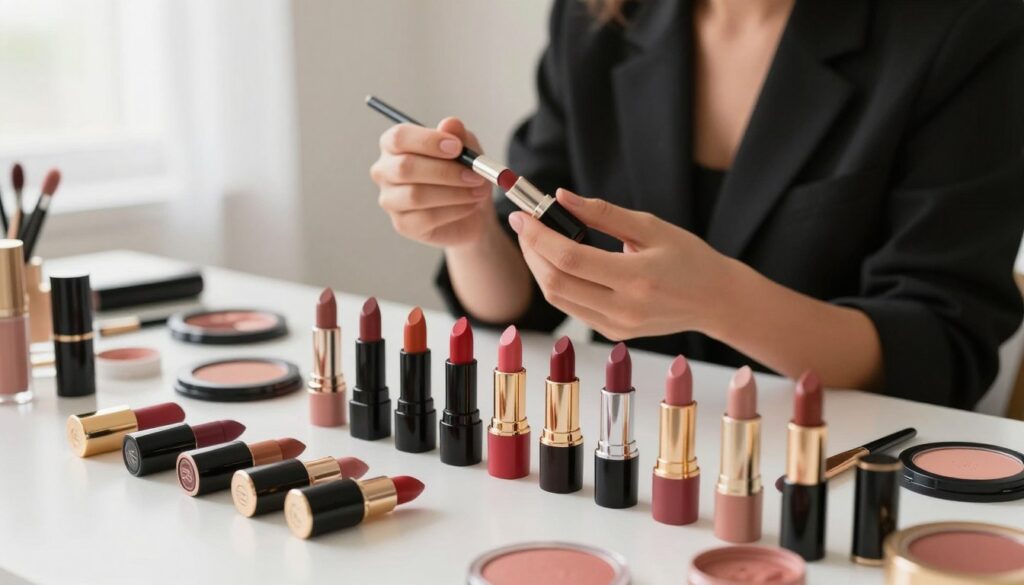
Real-world experience from top artists offers proven strategies for perfect color coordination. Their tested methods help you avoid common mistakes and find your ideal matches faster.
Insights from Professional Makeup Artists
Tamara Boyd emphasizes testing products on your actual lips. “The natural pigmentation of your lips affects the final result,” she explains. Wrist swatches can be misleading.
Sean Harris recommends trying nude, pink, and red options in both cool and warm versions. He notes that deeper complexions can carry richer, more saturated colors beautifully.
With over 16 years of experience, Manuel Espinoza provides specific undertone-based guidance. His expertise translates complex theory into practical shopping advice.
Top Product Picks Based on Skin Tone and Undertone
Real people share their favorite finds across different complexions. Their experiences demonstrate how theory works in practice.
| Skin Tone | Undertone | Recommended Product | Finish |
|---|---|---|---|
| Fair | Cool | Chanel Conte | Matte |
| Medium | Warm | Nars Heat Wave | Cream |
| Deep | Neutral | Bobbi Brown Plum Brandy | Satin |
| Olive | Warm | Make Lipstick in Rust | Matte |
Kim Johnson layers YSL Ultimate Beige over Nars Pigalle for a perfect mauve-brown. Umaimah Sharwani confidently wears Bobbi Brown Plum Brandy day and night.
Both matte and glossy finishes work for all complexions. The choice depends on personal preference. For dry lips, apply a hydrating treatment like Anokha Lip Butter before rich color.
Step-by-Step Guide to Testing Lipstick on Your Skin
Moving from theory to practice requires hands-on testing techniques that reveal how colors interact with your unique features. Professional makeup artist Tamara Boyd emphasizes testing directly on your lips rather than your wrist.
Proper Swatching Techniques
Apply a small amount of product to your lips in natural lighting. Wait a few minutes to see how the color develops. Some formulations change slightly after initial application.
Test multiple shades within your undertone category during the same session. Compare how various options look against your natural coloring. Sean Harris recommends swatching cool, warm, and neutral versions of similar shades.
Bring a small mirror when testing in stores. Step outside or near a window to see true colors. Fluorescent lighting can misrepresent how shades will look in daylight.
Using Lip Liner to Enhance Lip Color
Lip liner usage is a personal preference rather than a requirement. It offers specific benefits including shaping your lips and preventing feathering.
Choose a liner shade that matches your lipstick exactly or is slightly darker. Stay within your undertone’s recommended color family for harmonious results.
Apply liner just outside your natural lip line for subtle enhancement. Fill in the entire lip area to create a base that extends wear time. Blend the liner slightly inward to avoid harsh lines.
Keep makeup remover wipes handy during testing sessions. This allows clean removal of shades that don’t work well. You can try new options without muddied color mixing affecting your judgment.
Matching Lipstick to Your Unique Complexion
Medium and deep skin tones offer incredible versatility when it comes to lipstick selection. These complexions span from tan to rich brown and can carry both subtle enhancement and bold statements beautifully.
Tips for Medium and Deep Skin Tones
For medium skin tones, Kim Johnson demonstrates how to create custom colors. She layers YSL Ultimate Beige over Nars Pigalle for a perfect mauve-brown lipstick shade.
Mauve works particularly well across different undertones. When selecting a nude for medium skin, choose a shade one to two tones deeper than your natural lip color.
Sean Harris notes that deeper skin tones can carry richer, more saturated colors. Umaimah Sharwani wears deep berry tones day and night with confidence.
Cherie Camacho’s caramel complexion shines with deep purple shades like Maybelline Midnight Merlot. For deeper skin, avoid pale nudes that can appear ashy.
Instead, opt for rich nudes in terracotta, chocolate, or bronze. These complement your natural depth beautifully.
Creating a Harmonious Makeup Look
Balance is key when wearing bold lip color. Keep your eye makeup minimal with just mascara and groomed brows.
This lets your statement lip take center stage. Adriana Deleo applies bold lipstick color then blots slightly for a more integrated look.
The right lipstick shade creates a ripple effect across your entire appearance. It makes eyes appear brighter and teeth whiter.
Experiment with pairing statement lips with casual outfits for effortless chic. Use jewelry to reinforce your color choices – gold for warm undertones, silver for cool ones.
Conclusion
While understanding color theory provides valuable guidance, the most important factor in choosing lipstick is personal expression. You’ve learned how to identify your skin’s unique undertones and select complementary hues.
This knowledge empowers you to make informed choices, but remember that makeup is about creativity. If a shade makes you feel confident, it’s the right choice for you. The rules exist to be understood, not necessarily followed.
Build a versatile collection with both technically-matched shades and adventurous colors that express your mood. Experiment with different lipsticks to discover what makes you feel most beautiful.
Take this knowledge, test some recommended shades, and wear your choices with confidence. Your personal joy and self-expression are what truly matter in the world of beauty.
FAQ
What’s the difference between my skin tone and my undertone?
How can I figure out my undertone at home?
What are the best lipstick shades for cool undertones?
Which lipsticks work best for warm and neutral undertones?
How should I test a lipstick to see if it suits me?
Why is lip liner important, and how do I use it?
What are some great lipstick options for medium and deep skin tones?
How do I create a harmonious makeup look with my lip color?

Adam Peter is a finance, travel, and automotive writer with over a decade of experience. He creates clear, practical content to help readers manage their money, explore the world with confidence, and make informed decisions about cars and travel gear. His work blends expert insight with real-world usefulness.